After a Crash on the Pass? What Accident Recovery Handles
Quick Answer: After a crash on a mountain pass, an accident recovery crew handles the physical work of the scene. That means reaching the vehicle wherever it ended up, pulling it back to the roadway if it left the pavement, uprighting it if it rolled, securing loose parts, sweeping glass and debris from the travel lanes, and hauling the damaged vehicle to a safe place. Your job is smaller: stay safe, get checked for injuries, gather your belongings, and tell the crew where the car needs to go.
The snow started heavier than the forecast said it would. You were somewhere between Easton and the summit, the wipers were working hard, and the car ahead of you braked for no reason you could see. Now your front end is folded against the guardrail, or your car is sitting nose down in the snowbank beside the westbound lanes, and traffic is crawling past with its flashers on. Your hands are shaking. You are fine, or close to it, but the car clearly is not going anywhere on its own.
This is the moment most drivers realize they have no idea what happens next. Who moves the car? Who picks up the pieces of bumper scattered across the lane? What about the fluid leaking onto the road? This guide walks through what an accident recovery crew actually takes off your plate after a crash on the pass, what still falls to you, and how the whole thing usually unfolds from the first call to the moment your car is unhooked somewhere safe.
Why a Crash on the Pass Is Different From a Fender Bender in Town
A minor bump in a grocery store parking lot in Ellensburg is a simple job. Both cars are on flat, dry pavement, nobody is moving faster than a walk, and the damaged vehicle can usually be pulled straight onto a flatbed. Mountain driving changes almost every part of that picture.
On Snoqualmie Pass and the stretch of Interstate 90 dropping down toward Cle Elum, a crash often happens at highway speed, on a grade, in poor visibility, with a lane or two of traffic still moving beside it. Vehicles rarely come to rest in a neat spot. They end up across a lane, wedged against a barrier, sitting on their roof in the median, or below the shoulder where the ground falls away. Snow and ice make every surface slick, including the one the recovery crew has to work on. Cold hits batteries, hydraulics, and people alike.
Those conditions are exactly why accident recovery is its own kind of work, separate from a basic tow. The crew is not just hooking up a car. They are solving a puzzle: how to reach the vehicle, how to move it without making the damage worse, and how to do it while traffic keeps flowing a few feet away.
What the Recovery Crew Handles at the Scene
Once responders have made sure everyone is accounted for and the scene is protected, the recovery crew goes to work. Here is what typically falls to them.
Sizing Up The Scene
The operator checks vehicle stability, fluid leaks, ground slope, snow traction, and safe truck placement before choosing a recovery plan.
Positioning The Truck Safely
On narrow mountain shoulders, the truck is positioned to shield workers from traffic and allow controlled winching from a safe direction.
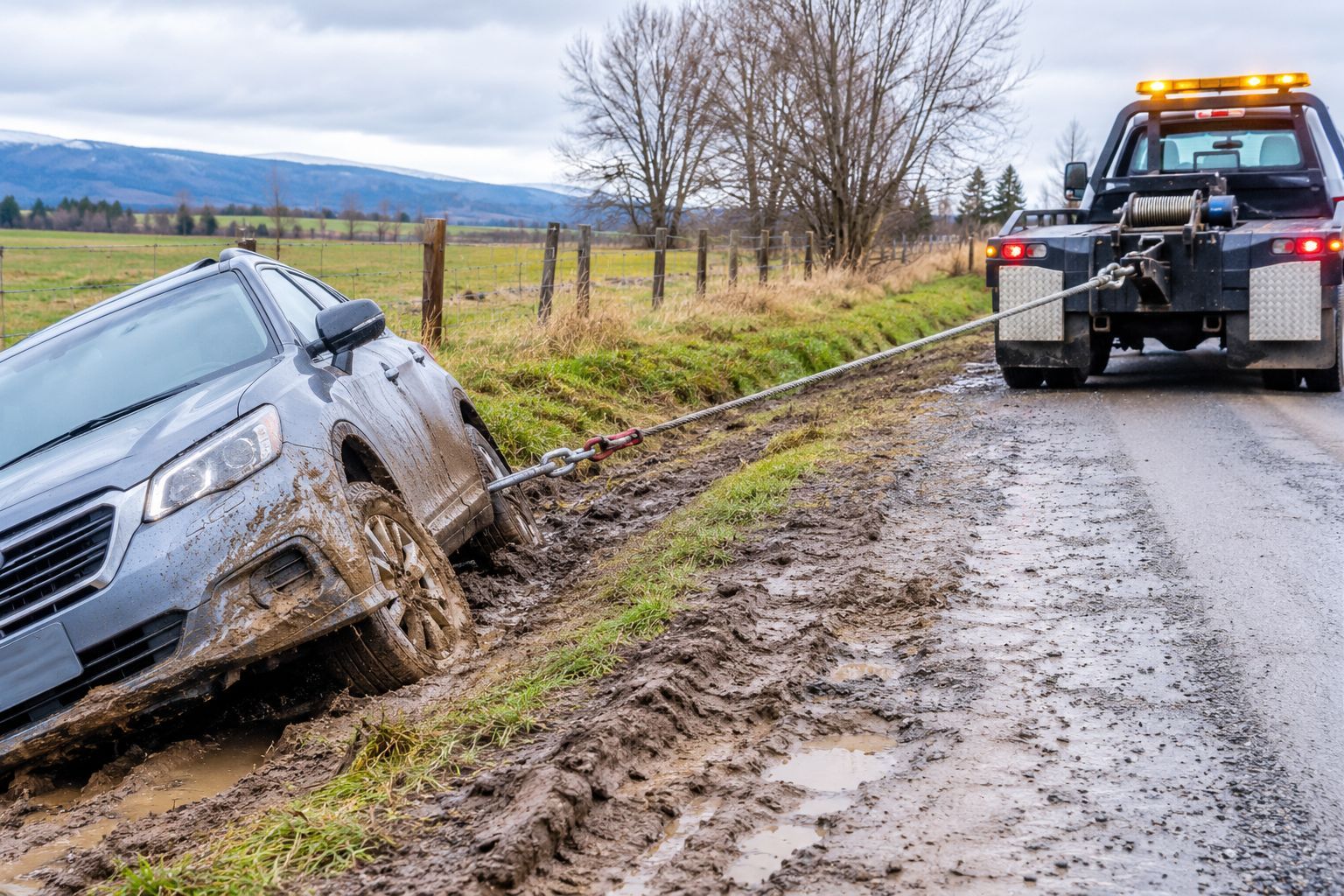
Reaching A Car That Left The Road
For vehicles stuck down embankments or in deep snow, operators attach winch cables securely and pull them back slowly to prevent further damage.
Uprighting A Rolled Vehicle
Operators use controlled, multidirectional pulling techniques to return overturned vehicles safely onto their wheels without causing unnecessary additional damage.
Securing Loose Parts And Leaks
Loose bumpers, mirrors, hoods, and broken lights are secured or removed. Crews also contain fluid leaks and apply absorbent materials to spills.
Sweeping Debris From The Lanes
Crews remove broken glass, plastic, and metal fragments from roadways, reducing hazards for passing vehicles and helping traffic resume safely.
Loading And Hauling The Vehicle
Damaged vehicles are typically loaded onto flatbeds, secured with multiple straps, and transported safely, keeping all four wheels off the road.
Tip: Before the crew loads your car, take a minute to photograph it from all four sides where it came to rest, along with the road conditions around it. Do this only if you can stay well away from moving traffic. These photos help later when you talk with your insurer or body shop, and once the car is moved, that view of the scene is gone.
What Still Falls to You
Accident recovery takes the heavy lifting off your hands, but a few things are yours to handle, and handling them well makes everything else go smoother.
Your Own Safety Comes First
If safe, exit away from traffic and move behind a guardrail or onto the shoulder. Otherwise, remain buckled in with hazard lights on.
Get Checked For Injuries
Adrenaline can mask injuries. Have responders check for neck pain, back soreness, head injuries, or bruising, and monitor symptoms over the following days.
Gather Your Belongings
Before towing, collect essentials like your phone, wallet, keys, medications, and child seats if safe. Ask the operator for help accessing damaged areas.
Tell The Crew Where The Car Should Go
Choose a repair shop, your home, or secure storage. If uncertain, nearby storage gives you time to decide your next steps.
Exchange Information And Report The Crash
Exchange names, insurance details, and license plate numbers with other drivers. Report the crash to authorities and contact your insurer for guidance.
How the Weather and Terrain Shape the Work
Drivers are sometimes surprised that a recovery on the pass takes longer than they expected. The reasons are almost always tied to the conditions.
Snow hides what is underneath. A car that looks like it is sitting on solid ground may actually be perched on a drift with a drop beneath it. The crew has to probe, dig, and sometimes clear snow before attaching anything. Ice under the truck reduces its own grip, so the operator may need to anchor or block the truck before pulling.
Visibility shrinks in a storm, which means extra lighting, extra cones or flares, and extra care to keep everyone visible to drivers coming around the curve. Plows working the pass and state crews managing traffic all have to coordinate around the scene, and a careful operator works with them rather than around them.
Grades add another layer. A car pulled uphill out of a ditch behaves differently than one pulled on flat ground, and a vehicle loaded onto a flatbed on a slope needs to be secured with extra attention so nothing shifts on the drive down. On the canyon roads near Thorp or along the Yakima River, sharp curves and narrow shoulders can limit where the truck can even park.
Warning: Do not try to drive a crashed car off the mountain because it still starts. A bent wheel, a cracked brake line, or a damaged steering part may not be obvious from the driver's seat, and on a steep, icy descent, losing braking or steering control can turn a bad day into a far worse one. If the car took a hard hit, let it ride down on a flatbed.
How a Typical Pass Recovery Unfolds
Every crash is different, but many recoveries on the mountain follow a familiar rhythm.
First, the call comes in, either from you, from responders on scene, or through your insurer or roadside plan. The operator asks where you are, what happened, what kind of vehicle you drive, and whether it is still on the road or off it. Mile markers, exit numbers, and the direction you were traveling all help.
Next, the truck arrives and the operator sizes up the scene, talks with any responders already there, and sets up the work zone. If the car is off the road, winching comes before anything else. If it rolled, uprighting comes first. Then loose parts are secured, fluids are contained, and debris is cleared from the lanes.
After that, the car is loaded and strapped down. You confirm the destination, collect anything you forgot, and arrange your own ride if you cannot travel in the truck. Then the car makes its way off the pass to the shop, your home, or a storage yard.
Finally, the lanes open back up. A well run recovery leaves the roadway clean, so the next driver through has no idea anything happened there at all.
Questions to Ask the Recovery Operator Before You Leave
While the crew is wrapping up, it is worth asking a few simple questions. Where exactly is the car going, and how do you reach that location? What should you bring when you go to retrieve personal items? Did they notice any damage under the car that you should mention to the shop? Is there anything about how the car was recovered, such as a winch pull from a ditch, that the repair shop should know?
Writing the answers down, or having the operator text them to you, saves a lot of confusion later when you are home and the details have started to blur.
Frequently Asked Questions
Is accident recovery the same as a regular tow?
Not quite. A regular tow moves a car already sitting on the road. Accident recovery covers winching from ditches, uprighting rolled vehicles, securing parts, containing leaks, and clearing debris, followed by the tow itself.
Can I ride in the tow truck after a crash?
Often you can, depending on the truck, the number of passengers, and the scene. Ask the operator directly. If there is no room, arrange a ride with family, a friend, or a rideshare first.
What happens to the glass and parts left on the road?
Clearing debris is part of the recovery crew's work. Glass, plastic trim, and metal fragments are swept from the travel lanes so the road can reopen safely for other drivers.
Should I move my car out of the lane myself?
If nobody is hurt and the car runs normally, moving it to the shoulder helps prevent a second crash. If it is badly damaged, leaking, or you are injured, stay safe and let the crew handle it.
What if my car went down an embankment and I cannot see it from the road?
Tell the operator exactly where you left the roadway, using mile markers or landmarks. Recovery crews handle vehicles below the shoulder regularly and will plan a controlled winch pull to bring the car back up.
Where can my car be taken after an accident recovery?
Usually to a repair shop you choose, your home, or a secure storage yard while you work out next steps with your insurer. Nearby storage gives you time to decide if you are unsure.
Leaving the Heavy Lifting to the Recovery Crew
A crash on the pass is stressful enough without trying to pull a car out of a snowbank or sweep glass off a highway in a storm. Knowing what an accident recovery crew handles lets you focus on the parts that are truly yours: staying safe, getting checked for injuries, gathering your belongings, and deciding where the car should go. Everything else, from the winch pull to the final debris sweep, belongs to the people trained for it. That clarity makes a hard day easier to get through.
Dean’s Towing & Auto Service
has helped drivers in Ellensburg, WA for 45
years, working the Interstate 90 corridor from the Kittitas Valley through Cle Elum, Easton, and Snoqualmie Pass. Years of mountain winters teach a crew how snow hides drop offs, how ice changes a pull, and how to keep traffic flowing safely beside the work. That experience means the car comes off the mountain carefully, the lanes reopen clean, and the driver can head home knowing the scene was handled well.