Winch-Out Recovery in Ellensburg: What It Is and When You Need One
Quick Answer:A winch-out is when a recovery operator uses a truck-mounted winch and cable to pull a vehicle back onto solid ground after it slides off the road, sinks into mud or snow, or drops a wheel into a ditch. It is different from a tow, which hauls a vehicle from one location to another once it is already on stable footing. A safe winch-out depends on the right anchor point, a slow and controlled pull, and a clear space around a cable holding heavy tension. Around Ellensburg, these calls happen most often on soft shoulders, snow-packed back roads, and canyon pullouts.
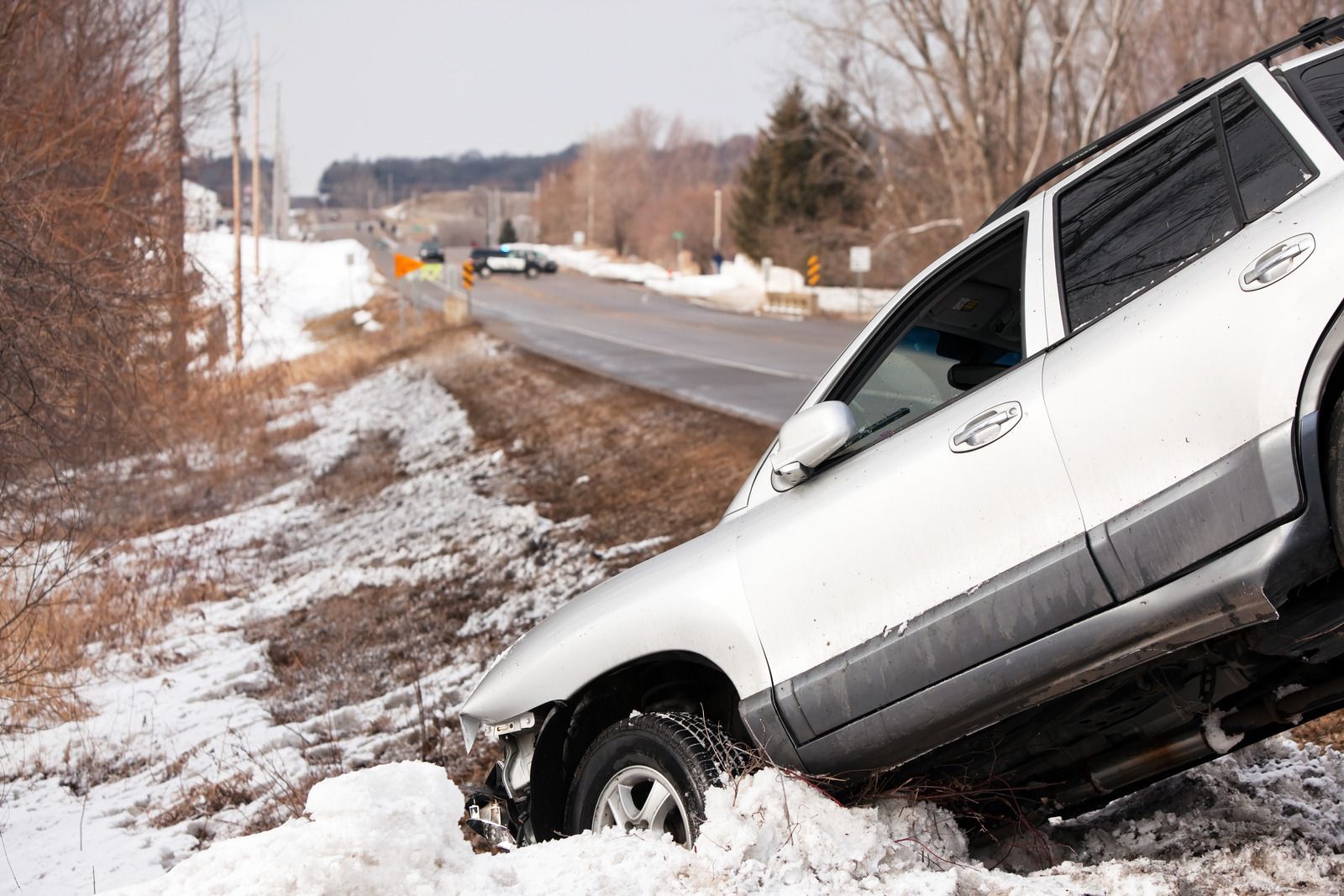
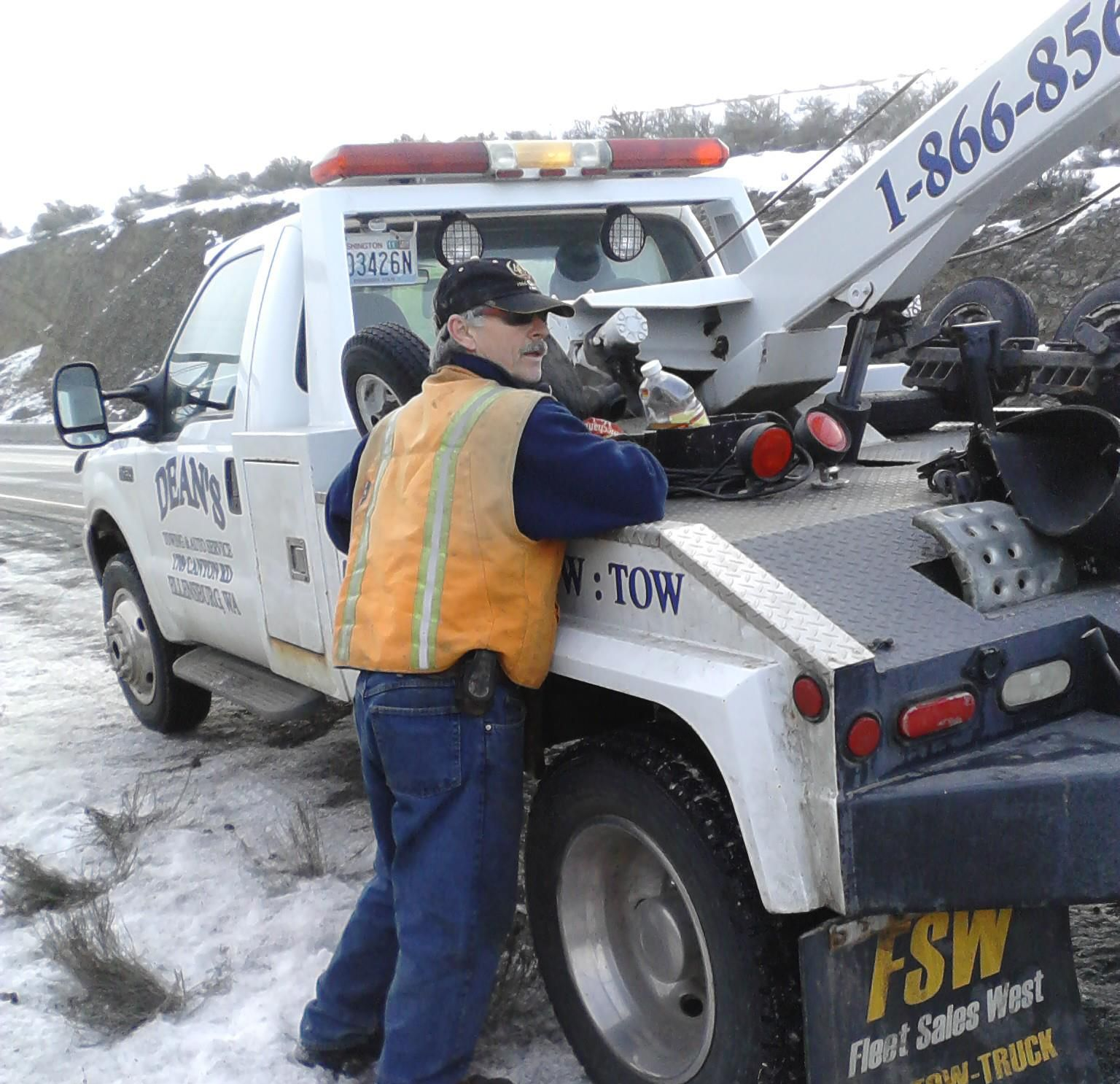
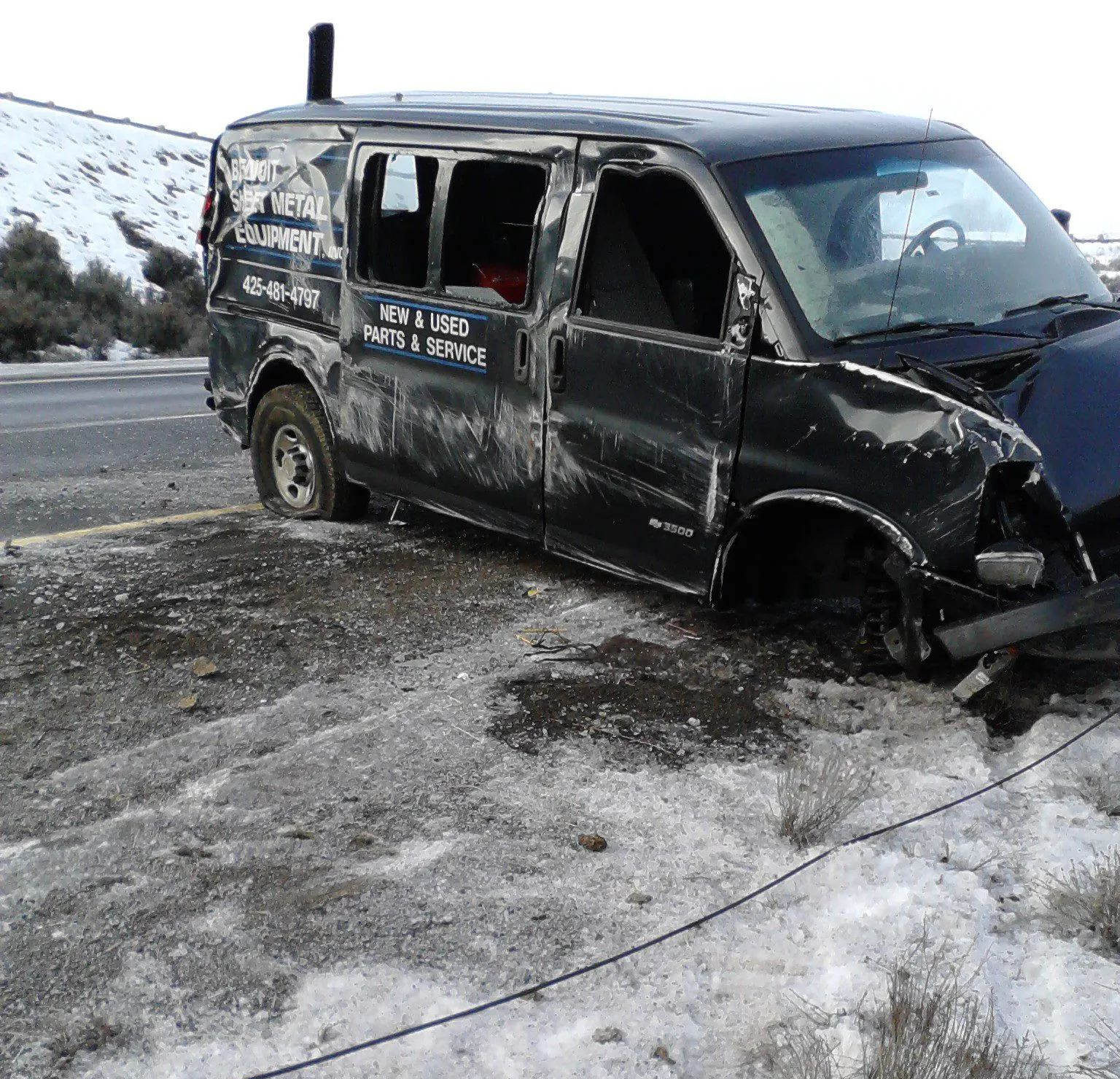
A pickup eases onto the shoulder along Canyon Road to let faster traffic by, the gravel gives way under the weight, and the right rear wheel slides into the drainage ditch. The engine still runs and nothing is bent, but the truck is not going anywhere on its own. Two wheels have traction and two are hanging over air. This is the kind of moment a winch-out is built for, and it comes up more than most drivers expect once the weather turns in the Kittitas Valley.
What a Winch-Out Actually Is
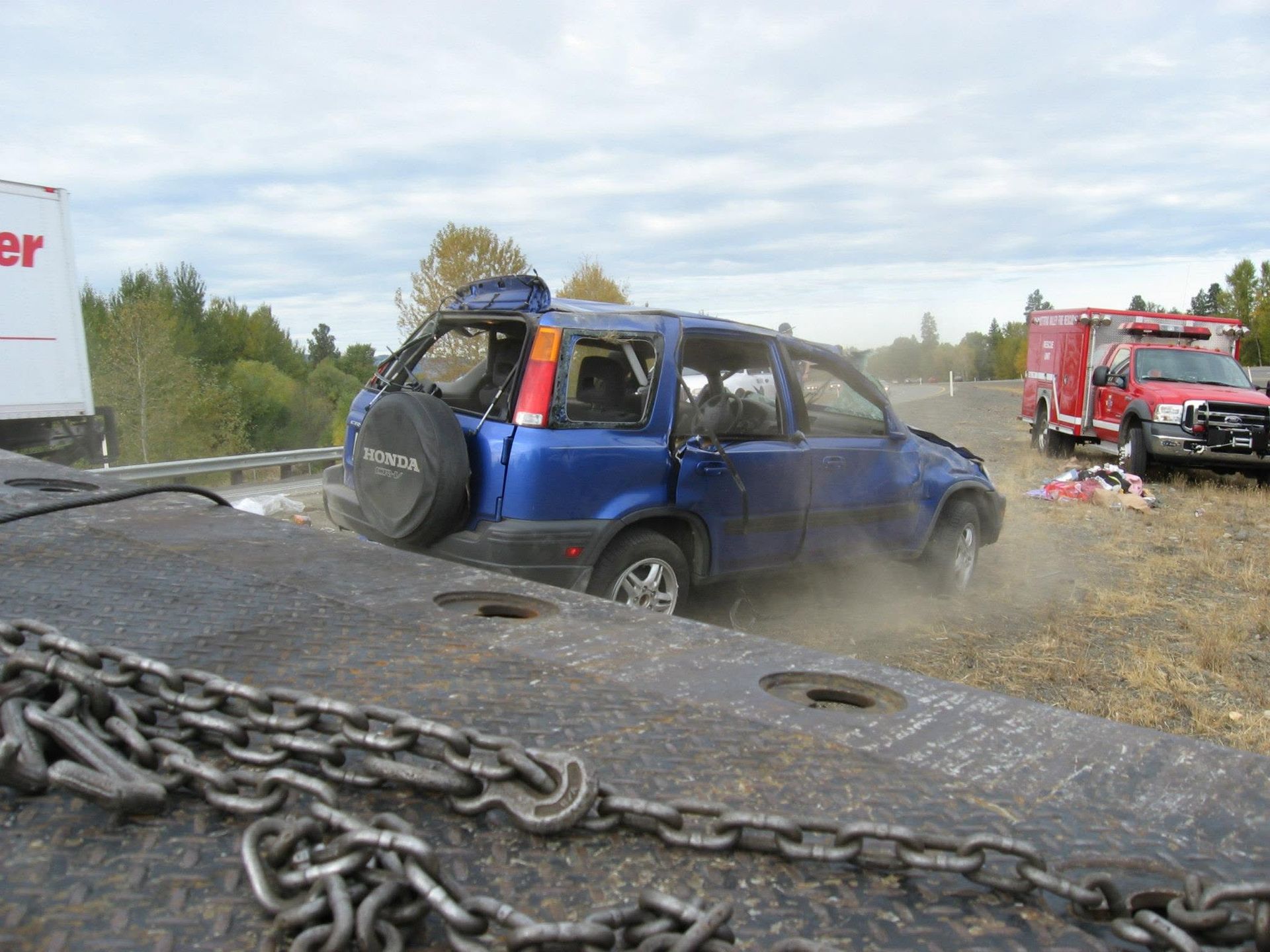
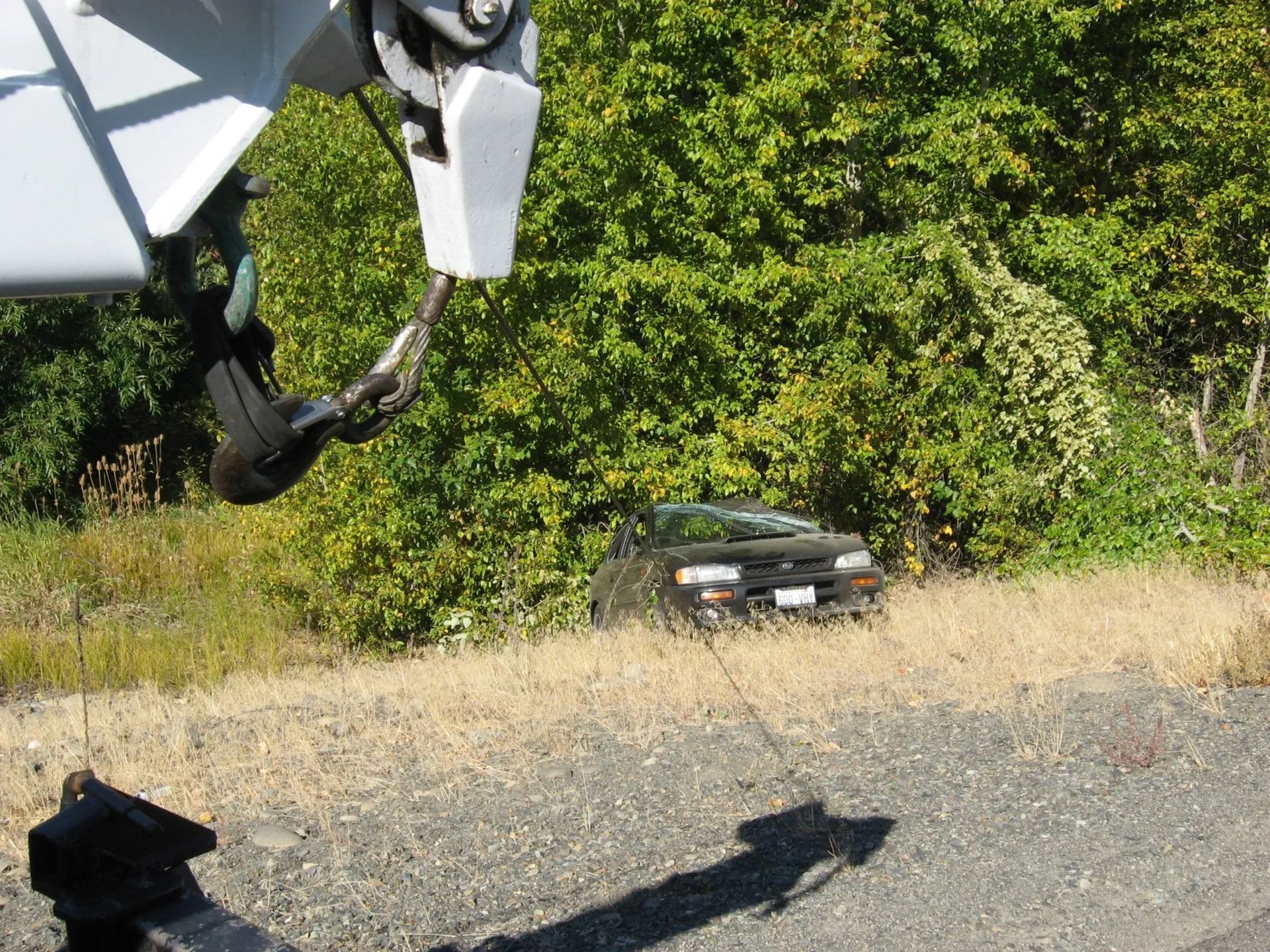
A winch-out uses a steel or synthetic line, spooled on a powered drum, to drag a vehicle from a spot it cannot drive out of and back onto a surface it can move on. The recovery truck stays on stable ground, an operator runs the line to the stuck vehicle, and the winch does the pulling while the driver steers.
Winch-Out Versus Tow
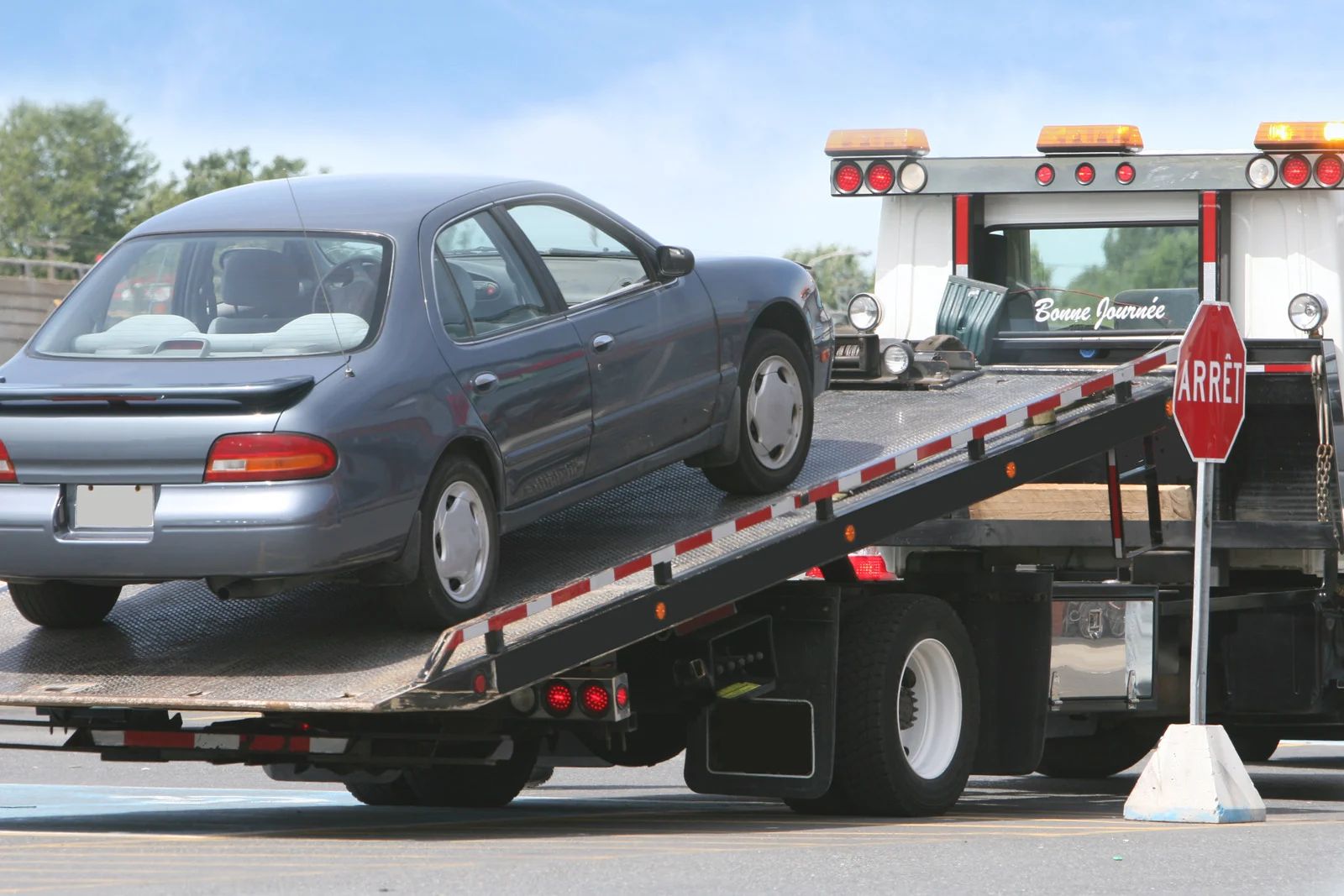
People often use the two words as if they mean the same thing, but they solve different problems. A tow moves a vehicle that is already sitting where a truck can reach and load it. A winch-out is the step before that. It gets the vehicle out of the ditch, the mud, or the snowbank first. Sometimes a winch-out is all that is needed and the driver continues on their way. Other times the vehicle is recovered and then towed, because the same event that put it off the road also left it unsafe to drive.
A Recovery, Not A Straight Lift
The goal is to move a vehicle along a path back to solid footing without dragging it sideways, rolling it, or tearing off the part the line is attached to. That path is rarely a straight line, which is why the angle of the pull matters as much as the strength behind it.
The Situations That Call for One
Most winch-out calls fall into a handful of patterns, and around central Washington they follow the seasons closely.
Soft Or Crumbling Shoulders
Rural roads through the valley often have gravel or dirt edges that look solid and are not. A wheel that drops off the pavement can sink far enough that the undercarriage rests on the ground and the tires lose their grip.
Snow And Ice
Winter storms move through the I-90 corridor and over the pass, and back roads outside town hold packed snow long after the highways are cleared. A car that slides into a snowbank or slips off an icy lane usually needs a pull to get back on the road.
Mud And Spring Runoff
When snow melts and the ground thaws, field access roads, driveways, and unpaved lots turn soft. A vehicle can settle into mud that will not release it no matter how carefully the driver works the pedals.
Ditches And Embankments
A momentary drift, a swerve to miss an animal, or a wind gust on an exposed stretch can put a vehicle down a slope or into a ditch. The Kittitas Valley is known for its wind, and a strong crosswind on an open road nudges high-profile vehicles more than drivers realize.
Off-Pavement And Canyon Pullouts
Anglers, hunters, and weekend drivers who leave the paved routes for river access or forest roads sometimes find soft sand, loose rock, or a hidden hole waiting where the ground looked firm.
Why Pulling Power Is Only Half the Job
Raw force will move almost anything. Moving a vehicle without adding damage is the harder part, and it is where experience shows.
The Anchor Is Everything
A winch can only pull as hard as the thing it is anchored to will hold. The recovery truck itself is the usual anchor, positioned so it stays put while the line comes tight. Choosing a spot with enough stable ground behind the truck is the first decision an operator makes, before any cable comes off the drum.
The Connection Point Matters
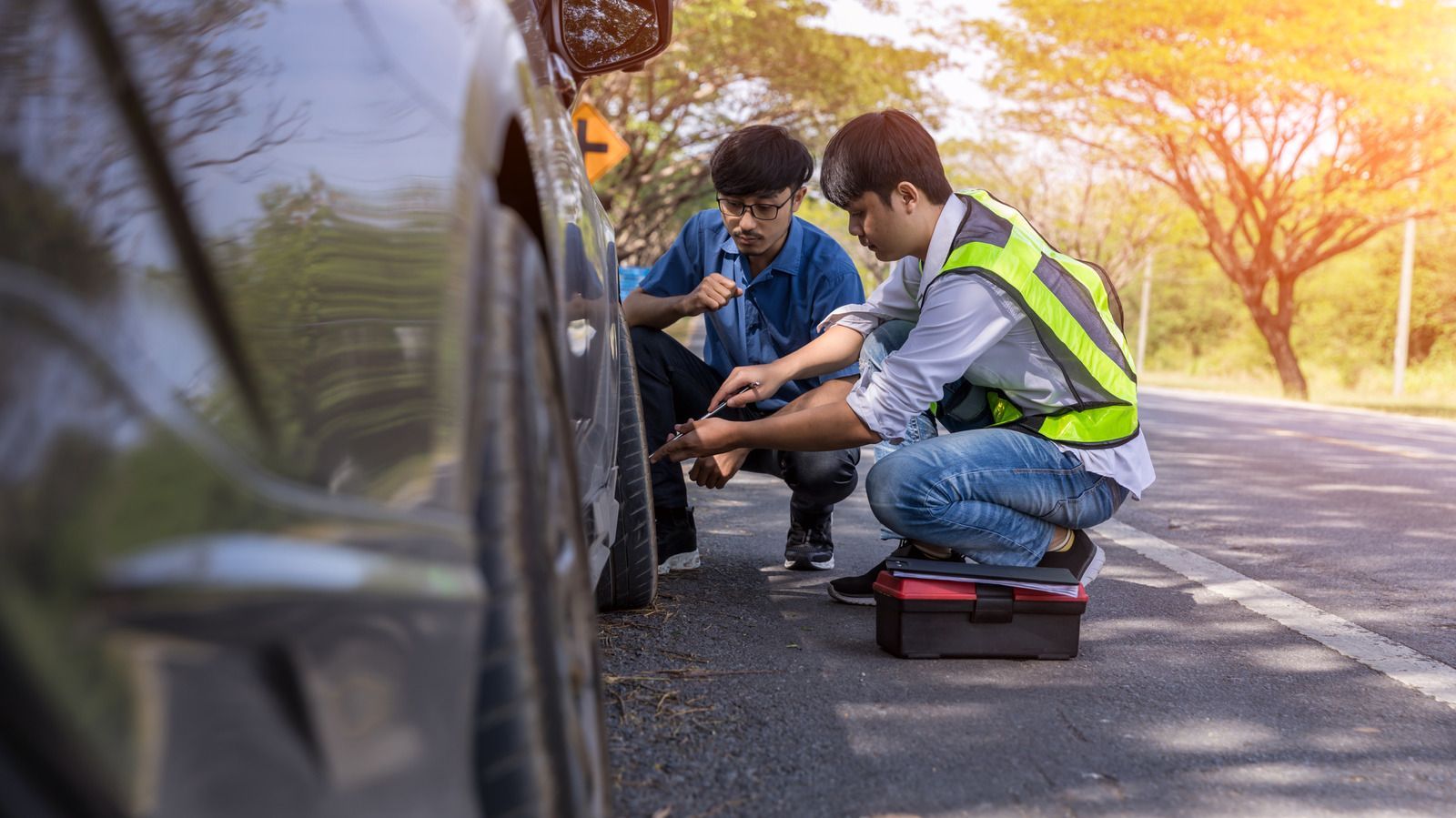
A recovery line has to attach to a part of the stuck vehicle that is built to take the load. Rated recovery points and frame locations are made for this. Bumpers, suspension arms, and tow balls are not, and pulling from them can rip the part loose under strain. Recovery safety guidance is clear that parts like these are not built for the sharp stress of a recovery pull and can tear away from the vehicle.
Angle And Staging
A pull that comes in at a bad angle can slew the vehicle sideways or scrape it along a curb or rock. An operator reads the ground, the slope, and the position of the wheels, then sets up the pull so the vehicle tracks back along a clean path.
The Danger of a Line Under Tension
A recovery line holding a heavy vehicle stores a large amount of energy. If something in the setup fails while the line is tight, that energy releases all at once, and this is the part of the work that most deserves respect.
Snap-Back Is The Real Hazard
If a line or an anchor breaks under load, the cable and any attached hardware can whip through the air. Safety guidance describes a failed line under tension as a hazard that turns the cable and fittings into fast-moving projectiles, and warns that a snapped line behaves like a whip with enough force to wreck equipment and badly injure anyone standing close.
Everyone Stays Clear Of The Line
Trained operators keep bystanders well away from a tensioned cable. The common guidance is to stand back at least one and a half to two times the length of the cable in use, and never to step over or straddle a line while it is under load.
A Dampener Rides The Line
A weighted blanket, called a line dampener, is draped over the middle of a cable during a pull. If the line breaks, the dampener absorbs the energy and forces the cable down toward the ground instead of letting it fly. This is treated as standard gear for any winching operation, not an optional extra.
Slow Beats Fast
A good recovery is deliberate. Steady, controlled pulls let an operator watch how the vehicle responds and stop the moment something looks wrong. Recovery guidance is blunt that winching is not a race, and that a successful recovery is slow and measured.
Why This Is Not a Do-It-Yourself Job
It is tempting to loop a strap between two trucks and yank a stuck vehicle free. That approach causes a lot of the damage and injury that recovery is meant to avoid.
The Weakest Link Fails First
A winch line is built for steady loads, not sudden jerks. Hooking a cable to another moving vehicle and snatching it exposes the line to shock forces it was never rated for. One technical breakdown points out that a winch cable is often the part most likely to fail in a recovery setup, and that shock loads can push it past its breaking point quickly.
Damage Adds Up Fast
A pull from the wrong point, at the wrong angle, or with the wrong gear can crease a body panel, bend a control arm, or crack an underbody component. What starts as a stuck wheel becomes a repair that far outlasts the original problem.
The Right Tools Are Already On The Truck
A recovery operator arrives with rated shackles, straps, a snatch block to change the direction of a pull, and the training to rig all of it correctly. That combination is what turns a stuck vehicle back into a driving one without a second incident.
Electric Vehicles and Modern Cars
Newer vehicles change how a recovery is handled. Electric vehicles carry heavy battery packs low in the chassis, and their recovery and lifting points are not always where a driver would guess. A Tesla or another electric model needs an operator who knows where the line attaches and how to move the vehicle without dragging or stressing the battery enclosure. Handling every vehicle type, electric models included, is part of why matching the recovery to the specific vehicle matters so much.
What to Do While You Wait
Once help is on the way, a few steps keep you safe and make the recovery faster.
Get to a safe spot
If the vehicle is in or near moving traffic and it is safe to step out, move away from the roadway rather than staying beside the car. If stepping out is not safe, stay buckled inside with the doors closed.
Make yourself visible
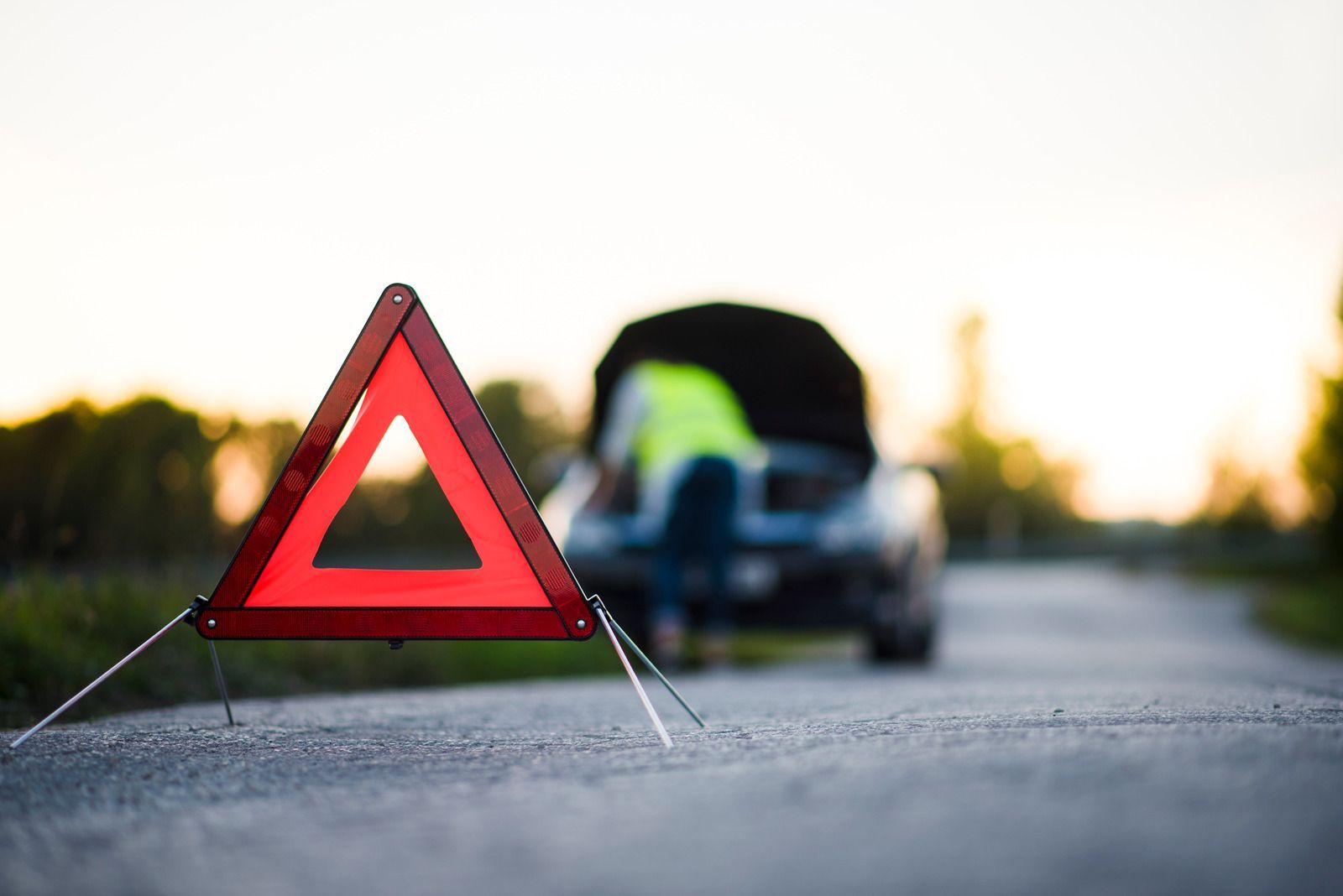
Turn on your hazard lights. If you have flares or reflective triangles and can place them without stepping into traffic, set them back along the road so approaching drivers see you early.
Note where you are
A cross street, a mile marker, a bridge, or a nearby landmark helps a recovery truck reach you faster, which counts for a lot on rural roads where one stretch looks like the next.
Leave the vehicle where it is
Repeated attempts to power out often dig the vehicle in deeper or shift it into a worse position. Once a pull is on the way, letting the vehicle sit is usually the better move.
Frequently Asked Questions
What is the difference between a winch-out and a tow?
A winch-out pulls a vehicle out of a spot it cannot drive from, such as a ditch, snowbank, or patch of mud, and back onto solid ground. A tow moves a vehicle from one place to another once it is on stable footing. A single call sometimes needs both: the vehicle is winched out first, then towed if the same event left it unsafe to drive.
Can I get pulled out with a strap and another truck?
It can work, but it carries real risk. Straps and lines exposed to sudden shock loads can fail, and a line under tension that breaks can whip back with enough force to cause serious injury or damage. A recovery operator uses rated gear, the right anchor, and a controlled pull to avoid those outcomes.
Will a winch-out damage my vehicle?
Done correctly, a winch-out moves the vehicle back to solid ground without adding damage. The key is attaching to a rated recovery point rather than a bumper or suspension part, and pulling at an angle that lets the vehicle track cleanly. Pulling from the wrong point or in the wrong direction is what causes damage, which is why setup matters so much.
How long does a winch-out take?
It depends on how the vehicle is stuck, the ground around it, and how far it needs to travel back to a safe surface. A wheel in a shallow ditch on firm ground is quick. A vehicle buried in deep mud or down an embankment takes more staging and a more careful pull.
Do you handle electric vehicles like Tesla?
Yes. Electric vehicles carry their batteries low and have specific recovery points, so they are moved in a way that protects the battery enclosure and the underbody. Handling every vehicle type, electric models included, is part of the job.
Why a Careful Recovery Matters in the Valley
A winch-out looks simple from the outside, but the gap between a clean recovery and a damaged vehicle lives in the details. The anchor point, the connection to a rated location, the angle of the pull, and the patience to work slowly all decide how the day ends. Force alone moves metal, yet only careful staging moves it without leaving a dent behind. That difference is what separates a routine pull from a costly one that lingers long after.
When a shoulder crumbles or a lane ices over between one mile and the next, getting back on the road is less about brute strength than about knowing how to read the ground. With 45
years of family-owned recovery work in Ellensburg, WA, Dean’s Towing & Auto Service
brings that judgment to every call, from a wheel in a ditch to a vehicle buried in spring mud. The stuck moment passes, the road opens up again, and the drive continues.